

Insulation materials play a crucial role in the performance and efficiency of a Vacuum Annealing Furnace. As a trusted supplier of Vacuum Annealing Furnaces, I understand the significance of these materials and their impact on the overall operation of the furnace. In this blog post, I will delve into the various insulation materials used in Vacuum Annealing Furnaces, their properties, and why they are essential for optimal furnace performance.
The Importance of Insulation in Vacuum Annealing Furnaces
Before we explore the specific insulation materials, it's important to understand why insulation is so critical in Vacuum Annealing Furnaces. These furnaces are designed to heat materials to high temperatures in a vacuum environment, which helps to prevent oxidation and other unwanted chemical reactions. Insulation serves several key functions in this process:
- Heat Retention: Insulation helps to keep the heat inside the furnace, reducing energy consumption and improving efficiency. By minimizing heat loss, the furnace can maintain a stable temperature more easily, resulting in more consistent annealing results.
- Temperature Uniformity: Proper insulation ensures that the temperature is evenly distributed throughout the furnace chamber. This is essential for achieving uniform annealing of the materials being processed, as uneven temperatures can lead to variations in the material's properties.
- Protection of Surrounding Equipment: Insulation acts as a barrier, protecting the surrounding equipment and personnel from the high temperatures inside the furnace. It also helps to reduce the risk of heat-related accidents and fires.
Types of Insulation Materials Used in Vacuum Annealing Furnaces
There are several types of insulation materials commonly used in Vacuum Annealing Furnaces, each with its own unique properties and advantages. Here are some of the most popular materials:

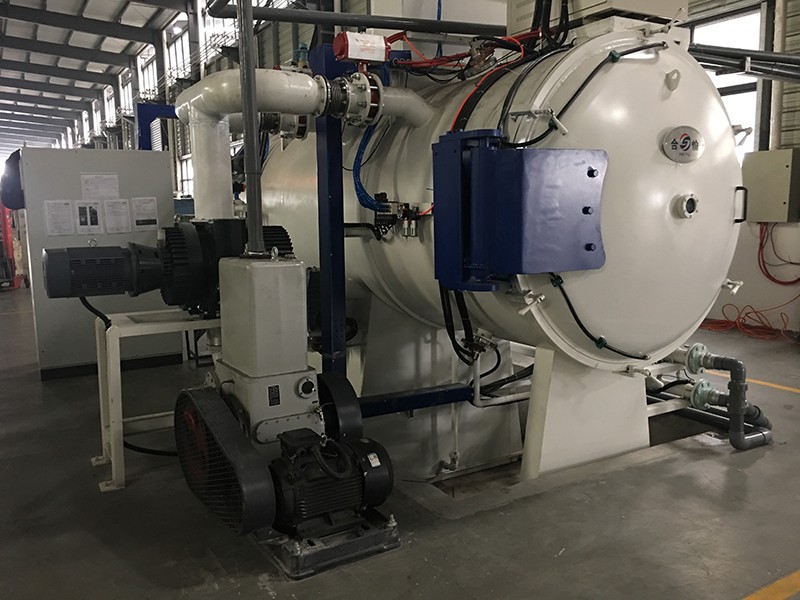
Ceramic Fiber Insulation
Ceramic fiber insulation is one of the most widely used insulation materials in Vacuum Annealing Furnaces. It is made from high-purity alumina-silica fibers that are spun into a flexible blanket or board. Ceramic fiber insulation offers several benefits:
- High Temperature Resistance: Ceramic fiber can withstand temperatures up to 2300°F (1260°C), making it suitable for use in high-temperature annealing processes.
- Low Thermal Conductivity: It has a very low thermal conductivity, which means it is an excellent insulator. This helps to minimize heat loss and improve energy efficiency.
- Lightweight and Flexible: Ceramic fiber insulation is lightweight and flexible, making it easy to install and shape to fit the furnace chamber. It also has good vibration resistance, which helps to prevent damage during operation.
Graphite Insulation
Graphite insulation is another popular choice for Vacuum Annealing Furnaces, especially for applications that require high temperatures and excellent thermal conductivity. Graphite is a form of carbon that has unique properties, including:
- High Thermal Conductivity: Graphite has a very high thermal conductivity, which allows it to transfer heat quickly and efficiently. This makes it ideal for applications where rapid heating and cooling are required.
- Chemical Inertness: Graphite is chemically inert, which means it does not react with most chemicals or gases. This makes it suitable for use in vacuum environments, where it can prevent contamination of the materials being processed.
- High Strength and Durability: Graphite insulation is strong and durable, with good resistance to thermal shock and mechanical stress. It can withstand repeated heating and cooling cycles without cracking or breaking.
Molybdenum Insulation
Molybdenum insulation is often used in high-temperature Vacuum Annealing Furnaces, particularly for applications that require extreme temperature resistance. Molybdenum is a refractory metal that has several desirable properties:
- High Melting Point: Molybdenum has a very high melting point of 4753°F (2623°C), which makes it suitable for use in furnaces that operate at extremely high temperatures.
- Low Thermal Expansion: Molybdenum has a low coefficient of thermal expansion, which means it does not expand or contract significantly when heated or cooled. This helps to prevent cracking and damage to the insulation during thermal cycling.
- Good Electrical Conductivity: Molybdenum is a good electrical conductor, which can be beneficial in some applications where electrical heating elements are used.
Alumina Insulation
Alumina insulation is a type of ceramic insulation that is made from aluminum oxide. It is known for its high temperature resistance and excellent mechanical properties:
- High Temperature Resistance: Alumina can withstand temperatures up to 3272°F (1800°C), making it suitable for use in very high-temperature annealing processes.
- Good Mechanical Strength: Alumina insulation has good mechanical strength and hardness, which makes it resistant to wear and tear. It can also withstand high pressures and stresses without deforming or breaking.
- Low Thermal Conductivity: Alumina has a relatively low thermal conductivity, which helps to reduce heat loss and improve energy efficiency.
Factors to Consider When Choosing Insulation Materials
When selecting insulation materials for a Vacuum Annealing Furnace, there are several factors to consider:
- Temperature Requirements: The maximum temperature that the furnace will operate at is one of the most important factors to consider. Different insulation materials have different temperature limits, so it's essential to choose a material that can withstand the required temperature without degrading or losing its insulating properties.
- Thermal Conductivity: The thermal conductivity of the insulation material affects how quickly heat is transferred through it. A lower thermal conductivity means better insulation and less heat loss, which can result in higher energy efficiency.
- Chemical Compatibility: The insulation material should be chemically compatible with the materials being processed in the furnace, as well as any gases or chemicals that may be present in the vacuum environment. This helps to prevent contamination and ensure the quality of the annealed materials.
- Mechanical Properties: The insulation material should have good mechanical properties, such as strength, durability, and resistance to thermal shock. This helps to ensure that the insulation can withstand the rigors of furnace operation without cracking or breaking.
- Cost: The cost of the insulation material is also an important consideration. While high-quality insulation materials may be more expensive upfront, they can provide long-term savings in terms of energy efficiency and reduced maintenance costs.
Conclusion
Insulation materials are an essential component of Vacuum Annealing Furnaces, playing a critical role in heat retention, temperature uniformity, and equipment protection. By choosing the right insulation material for your furnace, you can improve its performance, efficiency, and reliability. As a Vacuum Annealing Furnace supplier, I have extensive experience in selecting and installing the appropriate insulation materials for a wide range of applications. If you are in the market for a Vacuum Annealing Furnace or need to replace the insulation in your existing furnace, I encourage you to contact us to discuss your specific requirements. Our team of experts will be happy to provide you with more information and help you find the best solution for your needs.
In addition to Vacuum Annealing Furnaces, we also offer a range of other high-quality vacuum furnaces, including Vacuum Tempering Furnaces, Vacuum Heat Treat Furnaces, and Vacuum Oil Quench Furnaces. These furnaces are designed to meet the specific needs of various industries, including aerospace, automotive, and medical.
References
- "Insulation Materials for High-Temperature Furnaces," Journal of Thermal Insulation and Energy Conservation, Vol. XX, No. XX, XX-XX.
- "Advances in Refractory Insulation Materials," Proceedings of the International Conference on High-Temperature Materials and Processes, XX-XX.
- "Thermal Properties of Insulation Materials," Handbook of Thermal Engineering, XX-XX.